The top places to visit in Udaipur are City Palace, Lake Pichola, Sajjangarh (Monsoon) Palace, Udaisagar Lake, Fateh Sagar Lake, Doodh Talai, Maharana Pratap Memorial, the Vintage Car Museum, Jaisamand and Rajsamand Lakes, and Saheliyon ki Bari. Winter (September to February) is the best time to visit, and most attractions can be covered in 2-3 days.
Colonel James Tod, the first political agent of the East India Company in Rajasthan, called Udaipur the most romantic destination in India. Snuggled beside the serene Lake Pichola with ornate crests of Mount Aravalli stretching in each direction, Udaipur’s natural charm is enhanced further by fantastical palaces, elaborately decorated residences, ancient temples, breathtaking havelis, and crooked streets.
This guide covers the top 10 places to visit in Udaipur, with timings, entry fees and practical tips for your trip.
Key Highlights: Udaipur at a Glance
1. City Palace

When planning your Udaipur tourist places list, make sure to include City Palace. It was constructed by Maharana Udai Singh starting in 1553, with later rulers adding to it over nearly 400 years. Located on the banks of Lake Pichola, City Palace blends Medieval, Chinese and European architecture, and houses around eleven fortresses built across different periods. Expect plenty of terraces, courtyards, hanging gardens and pavilions.
City Palace uses a multi-ticket system: a cheaper complex ticket for the grounds, and a higher museum ticket for the exhibit halls, which is the part most visitors come for. Some of the fascinating spots inside include a museum displaying weaponry, war paintings and royal accessories, the crowning hall with its marble coin tub, a fourth-floor garden with meeting rooms, and the mirror-lined diwan-e-aam assembly hall.
| Timings | 9:30 am – 5:30 pm (all days), last entry around 4:30 pm |
| Museum entry | Roughly ₹300-400 for adults, about half for children (check current rates) |
| Crystal Gallery (optional) | Roughly ₹500 extra, a separate ticket |
For the latest official rates, see the City Palace entry fee and timings guide.
2. Pichola Lake

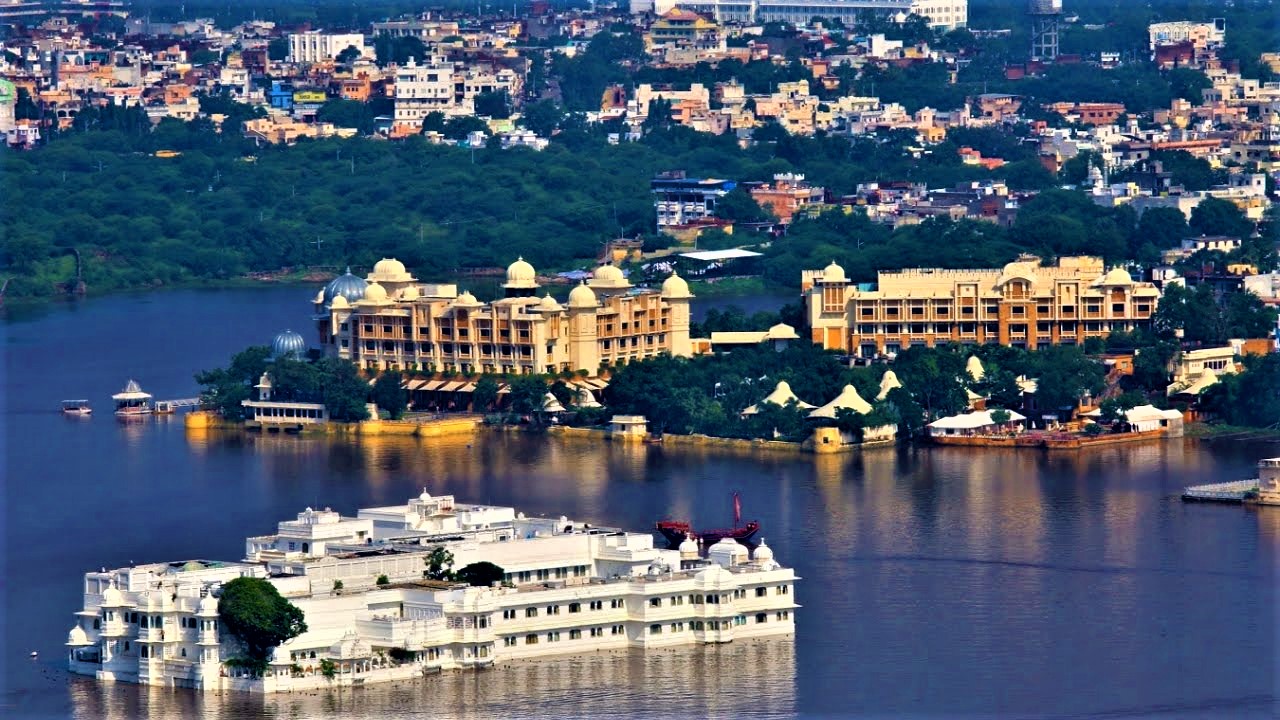
Pichola Lake is one of the best places to visit in Udaipur. Created in 1362 AD by Rana Udai Singh, this picturesque lake is encompassed by magnificent palaces, huge hills, aesthetic temples and large bathing ghats. Tourists cruise on Lake Pichola for stunning views of the entire town.
One of the most appealing attractions on the lake is the Lake Palace, constructed by Jagat Singh between 1628 and 1652. If you are planning what to see in Udaipur over 2 days, the Lake Palace deserves a spot. Decorative arch bridges at various points further enhance the lake’s appearance.
You should also take in the elevated platforms along Pichola. Natini Chabutara is the most popular of these, tied to a local legend about a tightrope walker named Natini, asked by Maharana Jawan Singh to cross the lake on a rope, a story that ends in tragedy and a curse on the king’s lineage.
| Timings | 9:00 am – 6:00 pm |
| Entry Fee | None |
| Boat Ride | ₹400 (adults) / ₹200 (children); sunset ride ₹700 (adults) / ₹400 (children) |
3. Sajjangarh Palace (Monsoon Palace)

Sajjangarh Palace, also known as the Monsoon Palace, sits atop a hill and offers phenomenal views of Fateh Sagar Lake and the Sajjangarh Wildlife Sanctuary. Built in 1884 by Sajjan Singh, it looks like a castle and reflects the lavishness of Rajput rulers, with panoramic views of mountains, lakes and citadels, making it a great spot for photography.
The palace is also known for featuring in the 1983 James Bond film Octopussy, appearing as the villain’s home, though several interior scenes were shot on sets rather than inside the actual building.
| Timings | 8:00 am – 6:00 pm (everyday) |
| Entry Fee | ₹10 for Indians, ₹80 for foreign nationals (approximate) |
4. Udaisagar Lake

Udaisagar Lake is one of the most recognised lakes in Udaipur, constructed by Maharana Udai Singh in 1565. It is four kilometres long, two kilometres wide, and nine metres deep. Environmental studies have flagged elevated phosphate levels in the water, linked to nearby phosphorite mines, distilleries and chemical factories, making it currently unsuitable for aquatic life or human consumption.
The National Lake Conservation Program has taken up restoration work here, focused on reducing pollution, limiting waste disposal and mining activity, and conserving wildlife, birds and heritage properties around the lake.
| Timings | Open all day |
| Entry Fee | None |
5. Fateh Sagar Lake

Named after Maharana Fateh Singh, this lake was constructed in 1680 and holds three islands. Nehru Park, reachable by motor boat, is the most popular; another island has a public park with a large fountain, and the third houses the Udaipur Solar Observatory.
According to the Udaipur Lake Conservation Society, Fateh Sagar supports drinking water, groundwater recharge and agricultural and industrial use for a large share of the region’s population. Local conservation efforts, led by an NGO established in 1992, continue to push for restoration schemes on Udaipur’s lakes, including this one.
| Timings | 8:00 am – 6:00 pm |
| Entry Fee | None |
| Boat Ride | ₹30 (regular) / ₹100-200 (motor boat) / ₹200-400 (speed boat), per person |
6. Doodh Talai

A small pond next to Pichola Lake near the Shiva Niwas Palace, Doodh Talai is covered by hillocks and hosts Manikya Lal Verma Garden and Deen Dayal Upadhyay Park, along with fast food joints, horse and camel rides, and boat rides.
A ropeway from Deen Dayal Park to the Karni Mata Temple, the first of its kind in Rajasthan, gives a four-minute ride with views of Pichola Lake, Sajjangarh Fort and City Palace. Deen Dayal Upadhyaya Park also has a musical fountain and a sunset point.
| Timings | 8:00 am – 10:00 pm |
| Entry Fee | ₹10 per person (approximate) |
7. Maharana Pratap Memorial

Maharana Pratap, who ruled Udaipur from 1572 to 1597, is remembered for his gallantry and bravery, and this memorial honours him with a lifelike bronze statue alongside his horse, Chetak. Sitting atop Pearl Hill, it overlooks Fateh Sagar Lake.
The adjoining museum has paintings depicting the history of Chittorgarh and Kumbhalgarh, along with scenes from the Battle of Haldighati, plus statues of figures close to Maharana Pratap. The memorial’s interior also features notable glasswork, including a colourful peacock motif.
- 24 km from Udaipur Airport, best reached by private cab.
- 2.5 km from Udaipur Railway Station, reachable by taxi or auto rickshaw.
- 5 km from City Palace, also accessible by state or private bus.
| Timings | 9:00 am – 6:00 pm |
| Entry Fee | ₹20 (adults) / ₹10 (children), approximate |
8. Vintage Car Museum

For a different kind of attraction, the Vintage Car Museum houses around twenty antique cars, including Rolls Royce, Cadillacs, Mercedes, an MG-TC Convertible, Vauxhall 12 and a Ford A Convertible, plus solar-operated rickshaws.
Inaugurated in 2000 by Lord Montagu of Beaulieu, the museum belongs to the HRH Group and is housed in Mewar’s old Motor Garage, a semi-circular structure enclosing a large courtyard. The vehicles, some dating to the early 1900s, are kept in remarkably good condition.
| Timings | 9:00 am – 9:00 pm |
| Entry Fee | ₹250 (adults) / ₹150 (children), approximate |
9. Jaisamand and Rajsamand Lakes

Jaisamand Lake is a manmade wonder sprawling over 36 square miles, 14 km long, 9 km wide and 102 feet deep, with a dam that includes a Shiva temple at its centre. Hawa Mahal, the Jaisamand Wildlife Sanctuary, Ruthi Rani ka Mahal and an island resort all lie within its grounds, and the lake draws migratory birds and animals from across the region.
Rajsamand Lake, meanwhile, has nine pavilions built by Maharana Raj Singh along its banks, decorated with carvings of chariots, the sun, birds and gods. Mewar’s history is etched across more than a thousand stanzas on marble slabs here, known as the Raj Prashasti, said to be among the longest inscriptions in India. During World War II, the lake served as a base for Imperial Airways.
| Timings | Open all day |
| Entry Fee | None (boat ride and wildlife sanctuary charged separately) |
| Boat Ride / Sanctuary | ₹30-80 per person, approximate |
10. Saheliyon ki Bari

Saheliyon ki Bari, or the “Garden of Maidens,” sits in the northern part of the city and features kiosks, fountains, marble elephants and a large lotus pool. Rana Sangram Singh built it between 1710 and 1734 as a gift for his queen and her 48 attendants, a quiet retreat away from royal politics.
An important 18th-century landmark, the garden is filled with tall trees, lush shrubs and fairy-tale-like structures. The Patio Nursery has two large springs, and a stroll through the grounds remains a relaxing way to spend an hour. Once reserved for royal women, the garden is now open to the public.
| Timings | 9:00 am – 7:00 pm (everyday) |
| Entry Fee | ₹5 per person (approximate) |
What Should You Know Before Visiting Udaipur?
Winter, from September to February, is the most pleasant time to visit Udaipur. The city is generally safe, but it’s best to avoid walking alone after 8 pm, carry maps or GPS if travelling solo, keep some cash handy, and stick to licensed guides and authorised ticket dealers.
For a stay, choose a palace hotel if your budget allows, a lakeside budget hotel for good value, or a homestay or hostel for solo travellers wanting a more authentic, local experience.
- Try local dishes like Daal Bati Churma, Kachori, Dabeli and Jalebi.
- Order a Rajasthani thali at restaurants offering both vegetarian and non-vegetarian options.
- Try Thandai, a traditional Rajasthani drink, available at most eateries.
Planning more of your India trip? See our guide to the top 10 summer vacation destinations in India for ideas beyond Rajasthan.
Key Takeaways
- ✓City Palace, Lake Pichola and Sajjangarh Palace are Udaipur’s three must-see attractions.
- ✓Winter (September to February) is the best season to visit, with 2-3 days enough to cover the main sights.
- ✓Most lakes, like Pichola and Fateh Sagar, have free entry, with charges only for boat rides.
- ✓Ticket prices and timings change fairly often, so confirm current rates before your visit.
- ✓Beyond sightseeing, try local dishes like Daal Bati Churma, Kachori and Jalebi, and a Rajasthani thali.
FAQs: Places to Visit in Udaipur
What is the best time to visit Udaipur?
Winter, from September to February, is the most pleasant time to visit, with cooler temperatures that make sightseeing more comfortable.
How many days are enough to see Udaipur?
Most travellers can cover the main attractions, including City Palace, Lake Pichola and Sajjangarh Palace, in 2-3 days.
What are the must-visit places in Udaipur?
City Palace, Lake Pichola, Sajjangarh (Monsoon) Palace, Fateh Sagar Lake and Saheliyon ki Bari are generally considered the top attractions.
Is Udaipur safe for solo travellers?
Udaipur is generally considered safe, but it is best to avoid walking alone after 8 pm, carry a map or GPS, and stick to licensed guides and authorised ticket dealers.
Which Udaipur attraction featured in a James Bond film?
Sajjangarh Palace, also known as the Monsoon Palace, featured as the villain’s home in the 1983 James Bond film Octopussy.
Do I need to pay entry fees at Udaipur’s lakes?
Most lakes, including Pichola, Fateh Sagar and Udaisagar, have free entry; you typically only pay for boat rides or specific attractions like wildlife sanctuaries.